Upgrading an AC, fridge, or phone usually comes with the same question: sell it, trade it in, or just let it sit in storage. The honest math almost always favours selling it directly — the gap between what a retailer's exchange offer gives you and what a real buyer will pay is often larger than people expect. Letting it sit in storage 'just in case' is also worth reconsidering: electronics and appliances lose resale value every additional year they sit unused, so the best time to sell is generally as soon as the decision to upgrade is made, not months later.
How much can you get if you sell an old mobile, AC or fridge in 2026?
|
Item |
Typical resale range |
|---|---|
|
Split AC, 1 ton, 3-5 years old, working |
₹8,000 – ₹13,000 |
|
Split AC, 1.5 ton, 3-5 years old, working |
₹9,000 – ₹15,000 |
|
Double-door fridge, 3-5 years old |
₹5,000 – ₹9,000 |
|
Single-door fridge, 3-5 years old |
₹3,000 – ₹5,500 |
|
Mid-range smartphone, 1-2 years old |
₹6,000 – ₹15,000 |
|
Flagship smartphone, 1-2 years old |
₹15,000 – ₹35,000 |
Where exchange/trade-in offers cost you money
Retailer exchange programmes bundle the value of your old item into a discount on the new purchase, which makes the actual trade-in value hard to see clearly — and it's almost always priced conservatively, since the retailer is taking on resale risk. Selling directly to a buyer who wants exactly that item, at a price you set based on real comparable listings, consistently nets more than an exchange counter.
The other way sellers lose money: undisclosed faults
A phone with a cracked back panel, an AC that takes longer than it should to cool, a fridge with a noisy compressor — all of these are still sellable, but only if disclosed upfront. Buyers who discover a fault after showing interest don't just negotiate the price down; they often walk away entirely, because the undisclosed fault reads as bad faith even when the item is otherwise fine.
Why age isn't the only thing that determines resale value
Two ACs of the same age and tonnage can resell for meaningfully different amounts depending on maintenance history — one serviced annually with clean filters and gas top-ups, another neglected for years, cools and looks different at inspection even if both technically 'work.' The same applies to phones: battery health, screen condition and accident history matter more to resale value than the number on the box. Mentioning a service history, when there is one, is one of the simplest ways to justify a price at the higher end of a typical range.
Why selling to a neighbour works better than a citywide listing
Big appliances are heavy and awkward to transport, which is the single biggest friction point on OLX or Quikr — a buyer 12km away has to arrange transport before they'll even commit to buying. A phone is lighter and easier to ship, which is why 'sell mobile online' listings work reasonably well for phones specifically — but even there, a buyer who can inspect the screen and battery health in person before paying still trusts the deal more than one based on photos alone. A Buy/Sell post to verified neighbours in your own pincode removes that friction entirely for both categories: pickup is a lift ride or a short walk away, and buyers can often inspect the item in person the same day, which builds the trust a photo listing alone can't.
How installation and removal charges factor into the real price
Selling an AC or a large appliance usually involves an uninstall charge on the seller's side and a reinstall charge for the buyer, which are easy to forget when comparing a sale price against a trade-in quote. Being upfront about whether the unit is being sold uninstalled, and roughly what a technician visit for removal costs in your area, avoids a last-minute price dispute once a buyer realises there's an extra cost they hadn't budgeted for.
Pricing it right the first time
Starting too high and negotiating down repeatedly tends to attract more time-wasting enquiries than starting at a fair, researched price and holding it — buyers comparing multiple listings can tell when a price looks inflated relative to condition and age. Checking two or three comparable listings (condition, age, brand) before setting a price takes a few minutes and usually leads to a faster sale than guessing and adjusting repeatedly after low interest.
What good photos and a good description actually include
For appliances, a photo of the model/serial sticker (proves age and specs), a shot of the item switched on if possible, and honest photos of any wear — not just the best angle — build more buyer confidence than a single polished photo. For phones, include the exact model, storage size, battery health if visible in settings, and whether original accessories and box are included, since these details are usually what a serious buyer asks about first anyway.
Wiping a phone properly before handing it over
Before handing over a phone, sign out of every account, remove the SIM and memory card, factory reset it, and de-register it from any 'Find My Device' or manufacturer account — skipping this is the single most common reason a buyer can't activate a phone after paying, turning a straightforward sale into a dispute neither side wanted. It takes a few minutes and is worth doing before a buyer arrives, rather than fumbling through it under time pressure.
How this plays out in real life
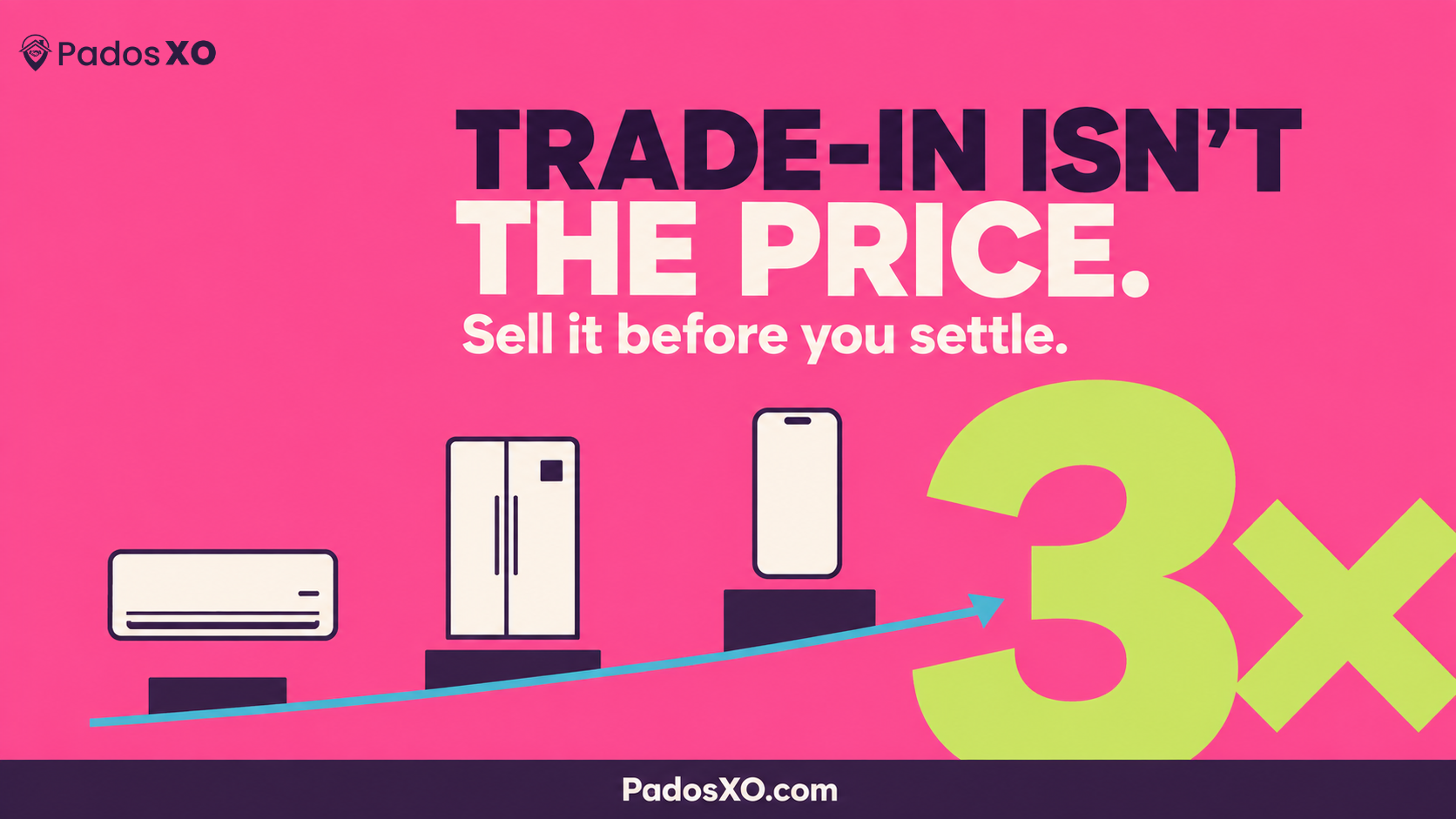
A Gurgaon resident upgrading her AC before summer got a trade-in quote of ₹3,500 from the retailer for a 3-year-old, fully working 1.5-ton split unit. She posted it as a Buy/Sell listing instead, disclosed a minor rattling sound honestly in the description, included a photo of the model sticker and one of it running, and sold it within two days to a neighbour furnishing a new flat — for ₹11,000, more than three times the trade-in offer, with no back-and-forth negotiation because the price and condition were both clear upfront.
Key takeaways
- Working ACs typically resell for ₹8,000-15,000, fridges ₹3,000-9,000, phones ₹2,000-35,000+ depending on model
- Retailer exchange/trade-in offers are almost always lower than a direct sale
- Disclosing minor faults upfront preserves trust; hiding them costs the sale later
- Big appliances sell faster to neighbours because transport friction disappears
- Checking comparable listings before pricing avoids both underselling and a stalled overpriced listing
- Photos of the model sticker, the item running, and any visible wear build more buyer confidence than one polished shot
- In-person inspection before purchase builds trust a photo listing on a citywide site can't
Someone nearby might want it. Post it on PadosXO.
Skip the retailer's lowball trade-in offer. Post your old AC, fridge or phone as a Buy/Sell listing on PadosXO and let a neighbour who actually wants it make you a fair offer instead.
FAQ
How much is a used AC worth in Delhi NCR in 2026?
A working 3-5 year old split AC typically resells for ₹8,000-15,000 depending on tonnage and condition.
Is trading in an old appliance worth it?
Usually not — retailer trade-in offers are priced conservatively and are almost always lower than a direct sale to a buyer.
How much can I sell an old smartphone for?
Anywhere from ₹2,000 to ₹35,000+ depending on model, age and condition — flagship phones from the last 1-2 years hold value best.
Should I disclose faults when selling a used appliance?
Yes — undisclosed faults discovered later usually cost the sale entirely, while disclosed ones just get priced in upfront.
Why is it easier to sell appliances to neighbours than on OLX or Quikr?
Transport is the biggest friction with heavy appliances on citywide platforms — selling to a neighbour removes that, and in-person inspection builds more trust than photos alone.
How do I price a used appliance or phone fairly?
Check two or three comparable listings for similar condition and age before setting a price — this avoids both underselling and an inflated price that stalls.
What details should I include when listing a used phone?
Exact model, storage size, battery health if visible, and whether original accessories and box are included — these are usually the first things a serious buyer asks.
Does maintenance history affect how much I can sell an appliance for?
Yes — a well-maintained AC or fridge (regular servicing, clean filters, gas top-ups) can justify a price toward the higher end of a typical range, since condition matters more to buyers than age alone.
Should I sell an old appliance right away or wait?
Selling sooner is generally better — electronics and appliances lose resale value the longer they sit unused, so waiting rarely helps.
Who pays for uninstalling and reinstalling an AC when it's sold?
This varies by agreement, but it's a real cost worth clarifying upfront on both sides — being upfront about it avoids a last-minute price dispute.
Do I need to factory reset a phone before selling it?
Yes — sign out of all accounts, remove the SIM and memory card, and de-register it from any 'Find My Device' service, or the buyer may not be able to activate it after paying.