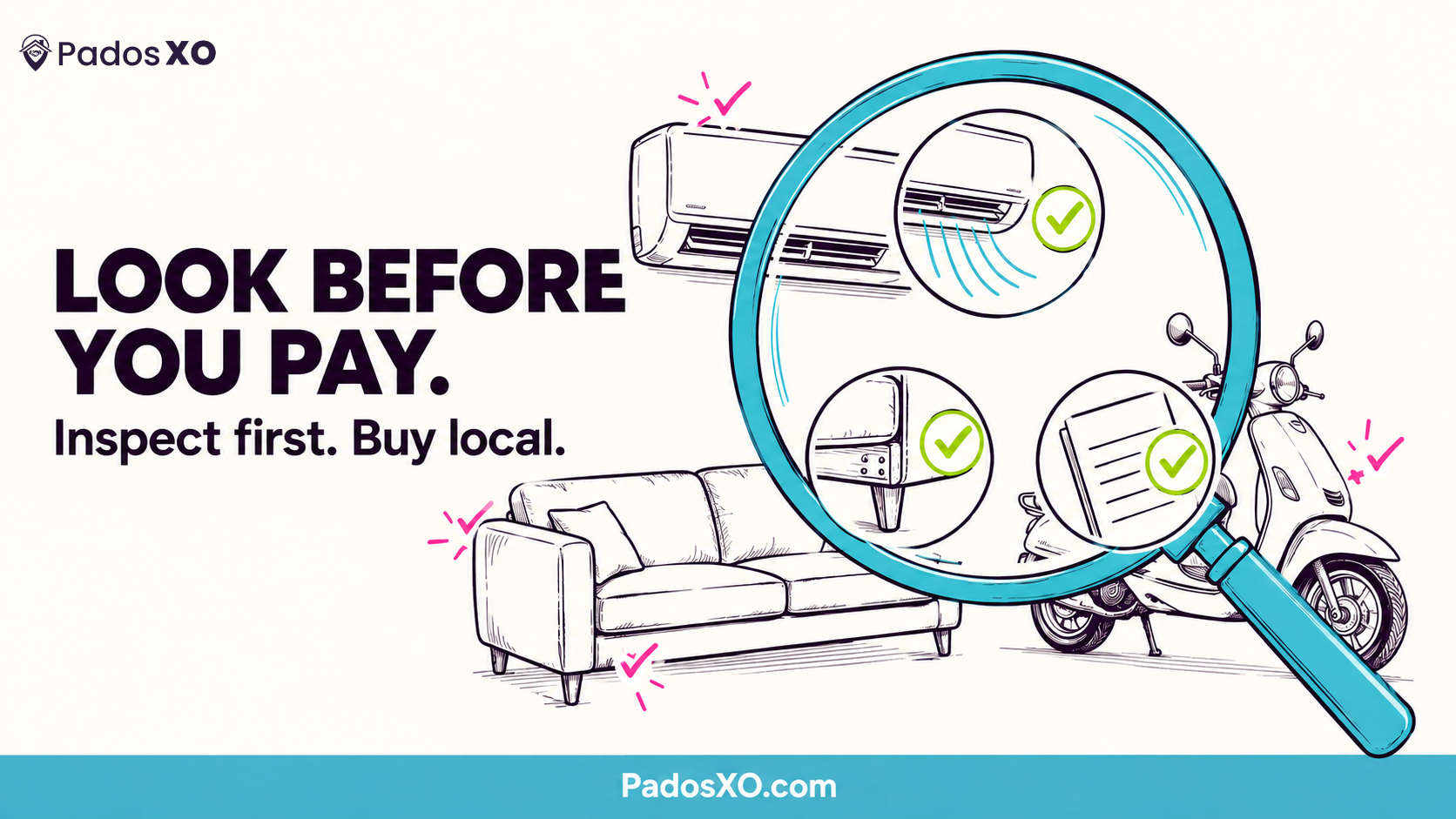
Second-hand furniture, appliances and bikes are some of the best value purchases available if the condition is genuinely as described — and some of the worst if it isn't. The difference usually comes down to whether you inspected properly before paying, and whether the seller has any real accountability if they misrepresented the item. Most second-hand buying mistakes aren't the result of dishonest sellers — they're the result of a buyer skipping a basic check because it felt awkward to ask, which is a habit worth deliberately overriding regardless of how the transaction is arranged.
Setting a realistic budget before you start looking
Second-hand prices for furniture and appliances typically run 40-70% below new retail for items in good condition, less for anything under a year old, more for older or heavily used pieces. Knowing this rough range before browsing listings helps spot both a genuinely good deal and a price that's unrealistically low for the stated condition — a suspiciously cheap listing for a supposedly like-new item is often either misdescribed or has a problem the seller hasn't mentioned yet.
Buying second hand furniture near you: what to actually check
Check joints and legs for looseness or repairs, look underneath for water stains or pest damage (termites in particular), and open drawers fully to check they still slide properly. Wood furniture that's been stored in a damp space often looks fine on top but has structural issues underneath — this is the single most common thing photos hide.
Buying an AC or fridge: the 10-minute test
Never buy a working appliance without seeing it actually run. Ask the seller to switch it on and let it run for 10-15 minutes — an AC should cool noticeably and run without unusual noise; a fridge's compressor should cycle on and off normally, not run continuously. A seller unwilling to demonstrate this before a sale is a clear red flag, not a minor inconvenience to skip.
Buying a used bike or scooter
Always verify the registration certificate (RC) matches the seller's ID, check the chassis and engine numbers against the RC, and confirm there's no pending loan (NOC) on the vehicle if it was financed. A seller who's cagey about the RC, or wants to complete the transaction without showing original documents, is the single biggest red flag in a used-vehicle purchase.
Beyond the paperwork, a short test ride (even a slow one around the block) reveals more than a stationary inspection — braking response, unusual engine noise, and how it handles at low speed are hard to judge just by looking at a parked vehicle. It's also worth checking the odometer reading against the vehicle's registration year for a rough sanity check, since a suspiciously low reading on an older vehicle is worth asking about directly rather than assuming it's simply lightly used.
Why buying from a verified neighbour is safer
On an anonymous citywide listing, if an item turns out misrepresented after payment, the buyer has essentially no recourse — the seller has no ongoing presence to hold accountable. Buying through a Buy/Sell post from a verified neighbour changes that dynamic significantly: sellers know they'll be seen in the same pincode again, which is real, ongoing social accountability that an anonymous online stranger simply doesn't have.
|
Risk factor |
Anonymous citywide listing |
Verified neighbour listing |
|---|---|---|
|
Inspecting before paying |
Often requires travel across the city |
Usually a short walk or lift ride |
|
Recourse if misrepresented |
Minimal — seller has no ongoing presence |
Real — seller lives in your own pincode |
|
Meeting-point safety |
Neutral public location advised |
Known building, known area |
Negotiating fairly once you've inspected
If inspection reveals a genuine issue not mentioned in the listing — a scratch, a minor mechanical quirk — it's reasonable to renegotiate the price on the spot rather than either walking away entirely or paying full price for something misdescribed. Most sellers, especially neighbours with an ongoing reputation to maintain, will adjust reasonably when the issue is pointed out calmly and specifically rather than treated as an accusation.
Payment and handover basics worth following regardless of source
For any second-hand purchase above a modest amount, prefer a digital payment (UPI, bank transfer) over cash for its automatic record, confirm the item works exactly as demonstrated immediately before paying rather than after, and for a vehicle specifically, complete the RC transfer formally rather than relying on a verbal handover — an incomplete transfer can leave the previous owner liable for future challans or issues tied to the vehicle.
Planning transport for bulky items
A sofa, wardrobe or double-door fridge won't fit in a hatchback, and arranging a mini-truck or tempo on the spot after inspection is a common last-minute scramble. Asking the seller upfront whether they can help with loading, and roughly measuring doorways and lift dimensions at the destination before committing to buy, avoids the frustrating scenario of a great deal that simply can't be moved into the new flat without disassembly or a delay of several days.
How this plays out in real life
A Noida resident furnishing a first flat found a 'like new' sofa listed on a citywide classifieds app for a great price, but the seller was 14km away and refused to send more than the original two photos. She skipped it and instead found a nearly identical listing from a neighbour two sectors over on a Buy/Sell post, inspected it in person the same evening, found a small tear the photos hadn't shown, negotiated ₹1,500 off on the spot, and picked it up the same weekend — all with zero travel risk on an item she could actually see before paying, and with a fair price adjustment made calmly once the flaw was pointed out.
Key takeaways
- Always inspect furniture joints, undersides and drawers in person — photos hide water and pest damage
- Never buy a working appliance without seeing it run for 10-15 minutes first
- For a used bike or scooter, always verify the RC and check for a pending loan/NOC
- A seller reluctant to demonstrate or document the item is the clearest red flag
- It's reasonable to renegotiate calmly if inspection reveals something the listing didn't mention
- Prefer digital payment for the record, and always complete a vehicle's RC transfer formally
- Buying from a verified neighbour adds real accountability an anonymous city listing can't offer
Find it nearby. Check it in person. Buy on PadosXO
Ready to furnish your new place without the second-hand risk? Browse Buy/Sell listings from verified neighbours on PadosXO — you can inspect before you pay, and there's a real person behind every listing.
FAQ
What should I check before buying second-hand furniture?
Joints, legs, undersides for water or pest damage, and that drawers still slide smoothly — these are the things photos most often hide.
How do I know if a used AC is actually in good condition?
Ask to see it run for 10-15 minutes — it should cool noticeably and run without unusual noise. Refusal to demonstrate is a red flag.
What documents should I check before buying a used bike?
The registration certificate (matching the seller's ID and the chassis/engine numbers) and confirmation there's no pending loan or NOC required.
Is it safer to buy second-hand items from a neighbour or a stranger online?
A verified neighbour carries real accountability since they remain in your pincode — an anonymous online seller generally doesn't.
Where should I meet to inspect and pay for a second-hand item?
A known, visible location works best — buying from someone in your own building or sector makes in-person inspection far easier than a citywide listing.
Can I negotiate the price after inspecting an item in person?
Yes — if inspection reveals something not mentioned in the listing, it's reasonable to renegotiate calmly on the spot rather than walking away or overpaying.
How should I pay for a second-hand item safely?
A digital payment (UPI or bank transfer) is generally preferable to cash for the automatic record it creates.
What's the most important step when buying a used bike or scooter?
Completing the RC transfer formally — an incomplete transfer can leave the previous owner liable for future issues tied to the vehicle.
Should I test ride a used bike or scooter before buying?
Yes — even a short, slow ride reveals braking response and engine noise issues that aren't visible from a stationary inspection.
What if the odometer reading seems unusually low for the vehicle's age?
It's worth asking the seller directly rather than assuming — a mismatch between age and odometer reading deserves an explanation before you commit.
How much cheaper should second-hand furniture or appliances be compared to new?
Typically 40-70% below new retail for items in good condition — a price far below that range for a supposedly like-new item is worth double-checking before paying.