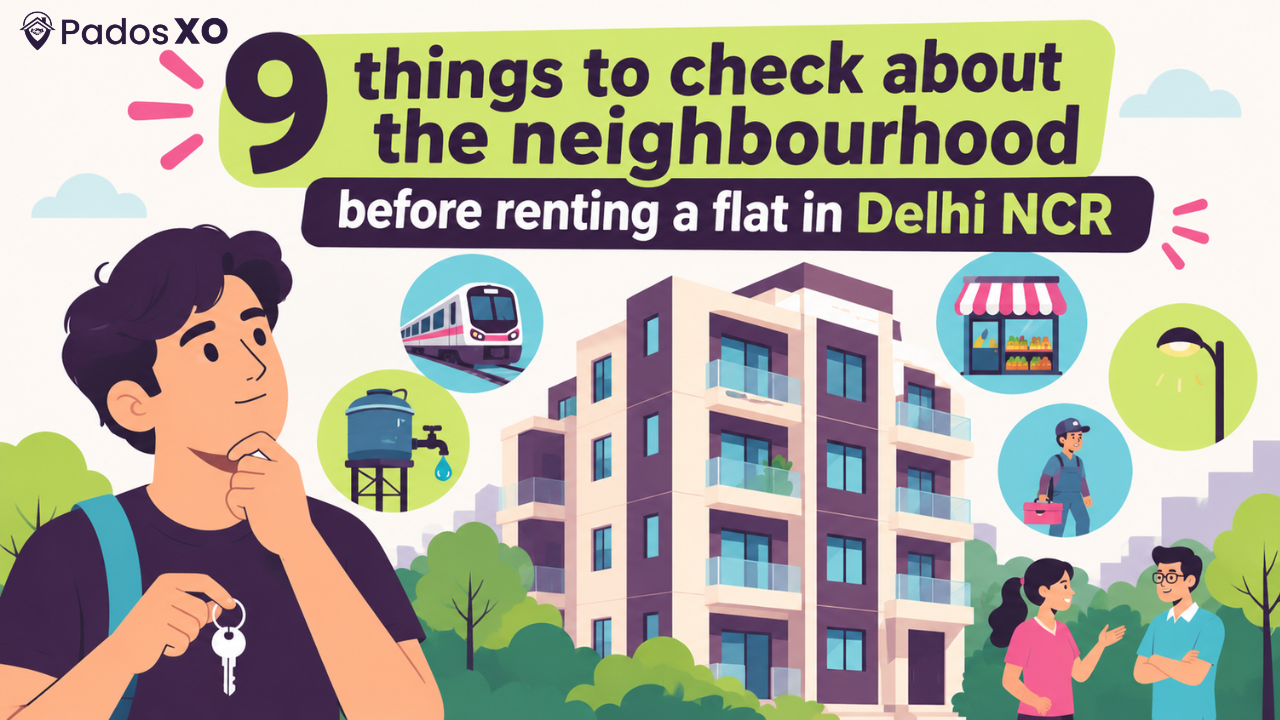
When you rent a home, you're not just choosing four walls. You're choosing the area you'll live in every day.
Here are nine things worth checking before you commit to a flat in Delhi NCR.
1. Don't Just Check the Distance to Work. Check the Actual Commute.
A property listing says your office is 8 km away. That sounds manageable. But what does 8 km mean at 9 AM on a weekday? A route that takes 15 minutes on a Sunday could take considerably longer during peak traffic. The nearest metro station may be close on the map but difficult to reach on foot. You may also discover that finding an auto or cab during peak hours is harder than expected.
Before finalising the flat:
-
Check the route during your actual office hours.
-
Visit the nearest metro station and see how you would reach it.
-
Check bus, auto, and cab availability.
-
Look at the walking route, not just the distance.
-
Consider your return journey, especially if you work late.
Try this: If possible, travel from the property to your workplace on a weekday before signing the agreement. A shorter distance doesn't always mean an easier commute.
2. Ask About Water Before You Admire the Bathroom
A well-designed bathroom looks great during a property visit. But a good-looking bathroom is not much use if the water supply is unreliable. Water arrangements can differ between buildings and even between residential societies in the same locality.
Before moving in, ask:
-
Is the supply municipal, borewell-based, tanker-based or a combination?
-
Are there fixed supply hours?
-
Does the building experience shortages during summer?
-
Is there a separate water charge?
-
Who handles complaints about water supply?
Don't rely only on the owner's answer. If possible, speak with someone who already lives in the building. A useful question to ask a resident: "Have you faced water shortages in the last few months?" That question is more likely to give you a practical answer than simply asking whether the society has a water supply.
3. Visit the Neighbourhood After Sunset
A locality can feel completely different at different times of the day. During an afternoon visit, the road may be quiet, the shops may be open and the surroundings may look peaceful. Return at 8:30 PM. Are the streets well-lit? Are shops still open? Is there regular transport? Are the approach roads busy? Does the area feel comfortable for your usual routine?
You should also look at:
-
Street lighting near your building.
-
The condition of the approach road.
-
Footpaths and pedestrian access.
-
Parking and traffic outside the building.
-
The availability of nearby shops and pharmacies.
This isn't about labelling a locality safe or unsafe based on one visit. It's about understanding the surroundings and deciding whether they suit your needs.
4. Find Out Who You'll Call When Something Breaks
A rented flat comes with more than a monthly rent payment. A tap leaks. An AC stops working. A switchboard needs repair. The internet connection goes down. Who do you call? The owner may have a preferred electrician. The building may have a maintenance team. A neighbour may know a reliable plumber who lives nearby.
Before moving in, understand:
-
Who is responsible for plumbing and electrical repairs?
-
Does the owner arrange repairs or do you have to?
-
Is there a building maintenance office?
-
Are there reliable local electricians, plumbers and AC technicians?
-
How are urgent maintenance complaints handled?
You don't need a list of ten service providers before moving in. But knowing where to find help can save you considerable time later.
5. Check the Everyday Essentials Within Your Neighbourhood
A good neighbourhood isn't necessarily the one with the biggest mall or the fanciest clubhouse. It's the one where everyday tasks are reasonably convenient. Imagine returning home after work and realising you need milk, medicine or a few groceries. Where would you go?
Check the availability of:
-
Grocery and general stores.
-
Pharmacies.
-
Clinics and diagnostic centres.
-
Vegetable and fruit shops.
-
ATMs and banking services.
-
Laundry and tailoring services.
-
Restaurants and tiffin services.
If you have children, also consider schools, playgrounds and childcare options. If you have elderly family members, check access to healthcare and convenient transport.
A practical exercise: Pick five things you use every week and find out where you would get them after moving into the area. It gives you a better picture of everyday convenience than a list of nearby landmarks.
6. Understand the Society Rules Before You Move In
Two apartments in the same sector can offer very different living experiences because their residential societies operate differently. Some buildings have strict visitor entry procedures. Others have restrictions around parking, pets, deliveries or moving furniture.
Ask the owner or property manager about:
-
Visitor entry and guest policies.
-
Parking availability and allocation.
-
Pet-related rules, if relevant.
-
Move-in and move-out procedures.
-
Maintenance charges and what they cover.
-
Rules for domestic help and deliveries.
-
Access to shared facilities.
Ask for the applicable rules in writing where possible. Don't assume that what the broker says is the same as the society's actual policy. Also clarify which charges are included in your rent and which are payable separately.
7. Talk to Someone Who Already Lives There
This may be the most useful step on the entire list. A property owner can tell you about the apartment. A broker can tell you about the locality. But someone who already lives there can tell you what everyday life actually looks like. You don't need to conduct an interview. A five-minute conversation with a resident can help you understand things that a property listing will never mention.
Ask questions such as:
-
Does the building face frequent water or power problems?
-
Is the area noisy during the night?
-
How is the maintenance team?
-
Are local shops and services easy to access?
-
Does the road get waterlogged during heavy rain?
-
Are there any recurring issues residents should know about?
For example, a flat in Greater Noida West may look attractive because of its price and apartment size. But your decision could change if you discover that the commute is difficult for your working hours or that your preferred transport options aren't convenient.
Likewise, a flat in Gurgaon may be close to your office but have limited grocery and pharmacy options within walking distance. The point isn't that one locality is better than another. It's that the experience of living somewhere depends on details that aren't always visible during a property visit.
8. Find Out Whether You'll Actually Feel at Home There
This is the part most rental checklists miss. You can check the rent, the water supply, the lift and the distance to work. But what about the people around you? If you're moving to a new city, having even a small local connection can make settling in easier.
You might want to find:
-
A nearby gym or sports group.
-
People who enjoy cycling or walking.
-
A local tutor for your child.
-
A home-cooked meal or tiffin service.
-
Neighbours who can recommend reliable local services.
-
Community events and activities.
You don't need to become best friends with everyone in your building. But knowing what's happening around you and having a few local connections can make an unfamiliar place feel more familiar.
9. Make a Locality Scorecard Before Making the Decision
When you visit several properties over a few weekends, the details can start blending together. One flat has better interiors. Another has a shorter commute. A third has more convenient shops nearby. Instead of relying on memory, compare the localities using a simple scorecard.
|
What to compare |
Property A |
Property B |
Property C |
|
Commute convenience |
4/5 |
3/5 |
4/5 |
|
Water supply |
1/5 |
5/5 |
3/5 |
|
Grocery and daily needs |
3/5 |
3/5 |
3/5 |
|
Healthcare access |
4/5 |
1/5 |
2/5 |
|
Transport availability |
2/5 |
3/5 |
4/5 |
|
Society management |
3/5 |
3/5 |
4/5 |
|
Local services |
5/5 |
3/5 |
4/5 |
|
Overall comfort |
x/5 |
x/5 |
x/5 |
These are personal ratings, not official locality rankings. Give each factor a score based on what matters to your household. For someone working from home, internet connectivity may matter more than metro access. For someone commuting daily, transport and peak-hour travel may be the deciding factors. The best locality is the one that works for your everyday routine, not necessarily the one with the most impressive property listing.
A Simple Neighbourhood Visit Checklist
Before paying a deposit or signing the agreement, take this checklist with you:
-
Visit the locality during the day and after sunset.
-
Test your commute during peak hours.
-
Check water supply and power backup arrangements.
-
Find nearby grocery stores and pharmacies.
-
Check mobile network and broadband availability inside the flat.
-
Understand society rules and additional charges.
-
Speak with at least one existing resident.
-
Find out how local maintenance and repair complaints are handled.
-
Check the rent agreement, deposit terms and repair responsibilities.
-
Record the flat's condition and existing damage before moving in.
For the property itself, verify the landlord or authorised representative, inspect the fittings and utilities, and make sure important payment and agreement terms are documented. Requirements and procedures can vary, so check the applicable local rules before signing.
Moving to a New Neighbourhood? You Don't Have to Figure Everything Out Alone.
The first few weeks in a new locality can involve a surprising number of small questions. Where can you find a reliable plumber? Which grocery shop delivers? Is there a good tiffin service nearby? Who can recommend a local tutor? What's happening in your sector? You could search for every answer individually. Or you could start discovering the people and businesses already around you.
PadosXO is built to make those local connections easier. Based on your pincode, you can explore neighbourhood updates, connect with verified neighbours, discover local businesses, ask for recommendations and find useful information about your surrounding area. You don't have to wait for a society committee or RWA to get started. Because finding a home is one thing. Getting to know the neighbourhood is what makes it feel like home.
Moving soon? Start discovering your neighbourhood with PadosXO.
Frequently Asked Questions
1. What should I check before renting a flat in Delhi NCR?
Check the apartment's condition, water supply, power backup, commute, nearby shops, healthcare access, society rules, maintenance charges and local transport. Speak with existing residents to understand everyday issues that may not be visible during a property visit.
2. Is it important to visit a rental property more than once?
Yes. A daytime visit can help you inspect the apartment, while an evening or peak-hour visit can give you a better understanding of traffic, noise, lighting and transport availability.
3. What questions should I ask existing residents before renting?
Ask about water shortages, power cuts, maintenance response, parking, noise, visitor policies, local services and recurring problems in the building or neighbourhood.
4. How can I find reliable local service providers after moving?
Ask existing residents for recommendations, check local business listings and compare reviews and experience before hiring someone. Neighbourhood platforms can also help you discover nearby service providers.
5. What makes a neighbourhood good to live in?
It depends on your needs. Useful factors include commute convenience, reliable utilities, healthcare access, everyday shops, transport, comfortable surroundings, society management and access to local services.
6. How can I get to know people in a new neighbourhood?
Start by introducing yourself to nearby residents, asking for local recommendations, participating in community activities and exploring neighbourhood groups or local community platforms.